
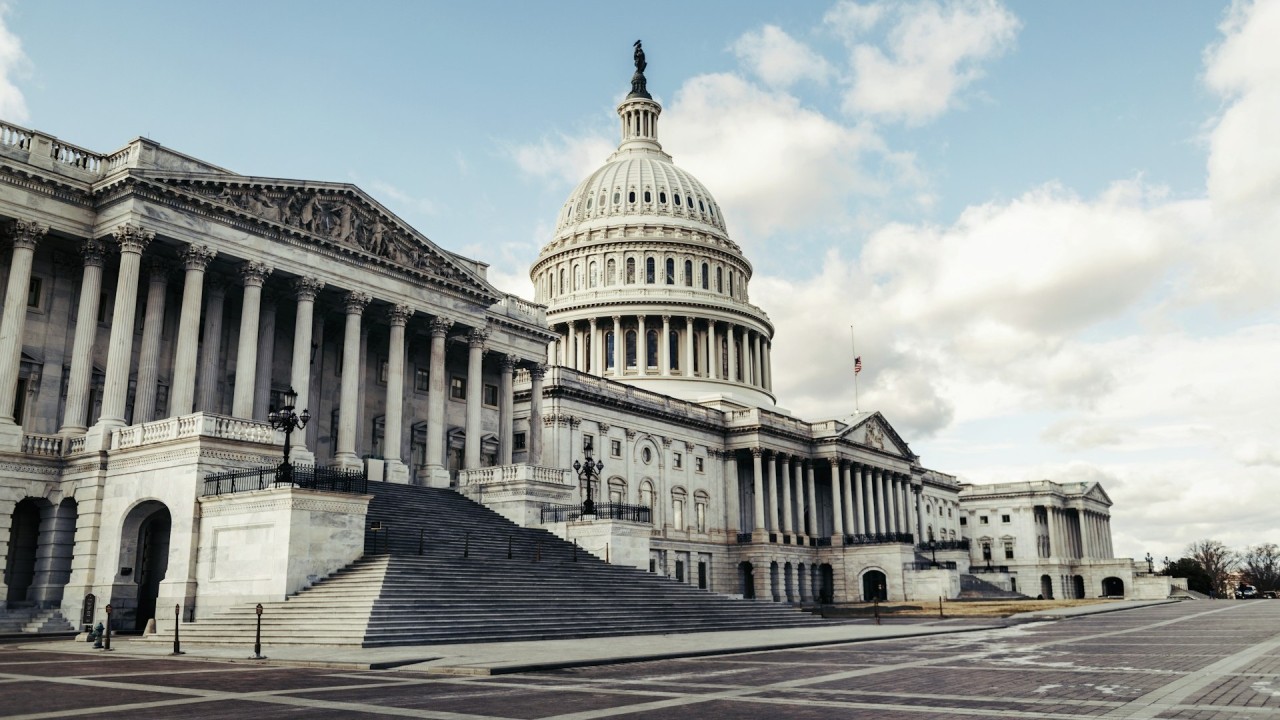
Photo credit: Tim Mossholder via Unsplash
The shift of the U.S. Congress into Democratic hands in the November 3, 2026 midterm elections could tempt some decision-makers to lower their guard against American technological hegemony. That would be a major strategic mistake.
A Structural Risk, Never a Partisan One
First, Donald Trump remains in the White House until the end of his term, with the next presidential election scheduled for November 7, 2028, and the transfer of power in January 2029. More importantly, history reminds us that mass surveillance and extraterritorial reach do not depend on which party holds power in Washington. It was under Barack Obama's Democratic administration that Edward Snowden exposed the PRISM program, the tapping of allied leaders' phones, including Angela Merkel's, and coordinated economic espionage conducted on Canadian soil during the 2010 G20 summit in Toronto.
Digital dependence is a structural risk, never a partisan one.
Investing in Our Digital Autonomy
To break this technological lock-in, Canada's federal government must make strategic investments: for example, deploying submarine cables under sovereign control and gradually phasing out proprietary office suites in the public service, following the example of the French government's rollout of “LaSuite” to more than 500,000 public servants.
Five Recommendations for Quebec
At the provincial level, Données Souveraines Québec (DSQ) sets out a path in its 2026 roadmap through five key recommendations:
- Structure the supply side through a rigorous reference framework defining digital sovereignty and a certification process verified by independent auditors to prevent sovereignty-washing.
- Stimulate demand by introducing a refundable tax credit to ease the transition to certified solutions.
- Make government a model buyer by adapting public procurement processes to favour sovereign solutions, open-source software and exit strategies.
- Build the essential culture and skills to develop talent, raise public awareness and protect our cultural heritage.
- Develop sovereign, resource-efficient and environmentally responsible AI, favouring compact architectures suited to Quebec's energy constraints rather than foreign mega-models.
Digital sovereignty is not negotiated to the rhythm of foreign election cycles: it is built here at home.
Sources and References
- PRISM surveillance and the tapping of allies' communications: Wikipedia — PRISM, BBC News and CBC News revelations (G20).
- Public-sector office software transition: LaSuite numérique interministérielle (DINUM).
- Quebec recommendations: Roadmap for Quebec's digital sovereignty (Données Souveraines Québec, 2026).
About the author: Florian Strich, Data and Privacy Advisor.
Note: This article was written with the assistance of artificial intelligence, then fully verified, sourced, corrected and validated by me.